Finding the magic of poetry with Rupi Kaur
false

false
false
false
What would you like to explore?
false
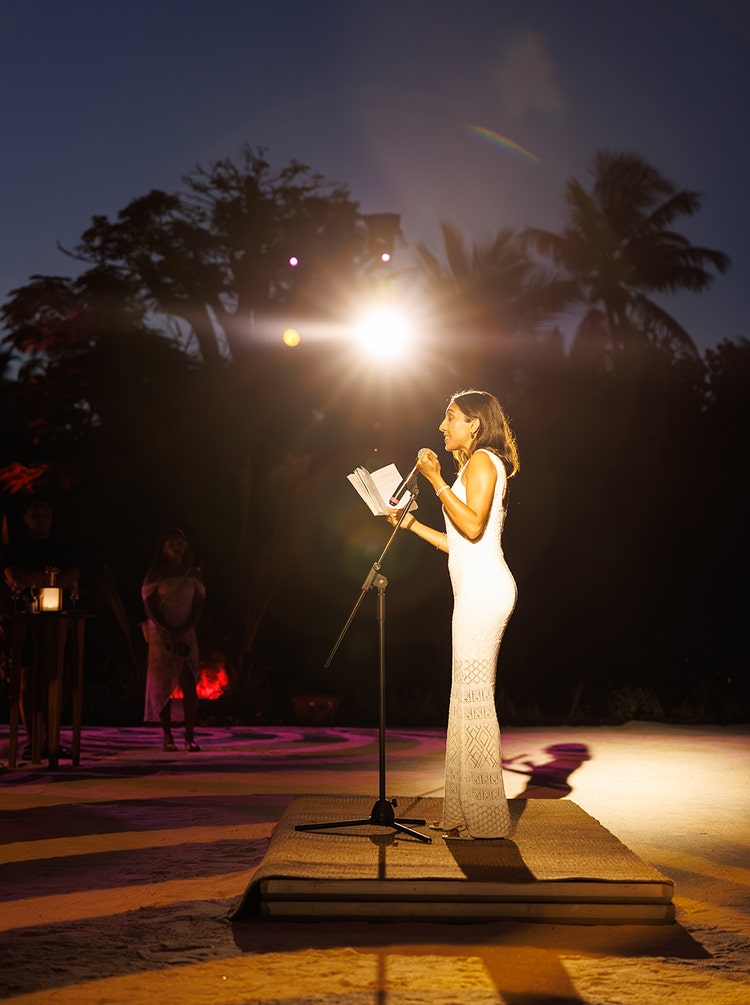
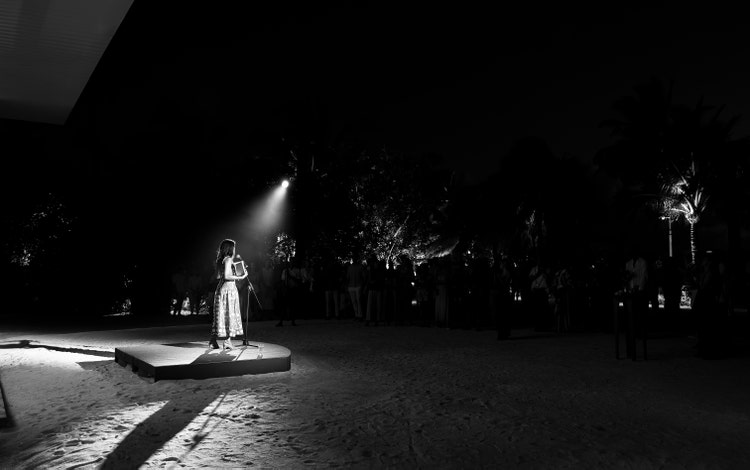
It’s sunset on 19 September 2025, and Rupi Kaur is standing in front of Patina Maldives’ flagship Skyspace Amarta installation, its neon radial lights illuminating the sand on which Kaur stands. She is opening the first day of Fari Islands Festival, and her witty aphorisms and hard-fought mantras of empowerment are distilling the universe to a single thread that has encompassed the audience before her. As will be the case with Kaur’s following performances over the next two days, the crowd is transfixed.
Recalling the performances a year later, however, Kaur’s words are slightly less delicate. “Like what?! How is this real life?” the poet exclaims.
right
false
false
“Not for a second did I imagine that poetry would bring me to a place like that. My younger self would never believe it.”
Rupi Kaur
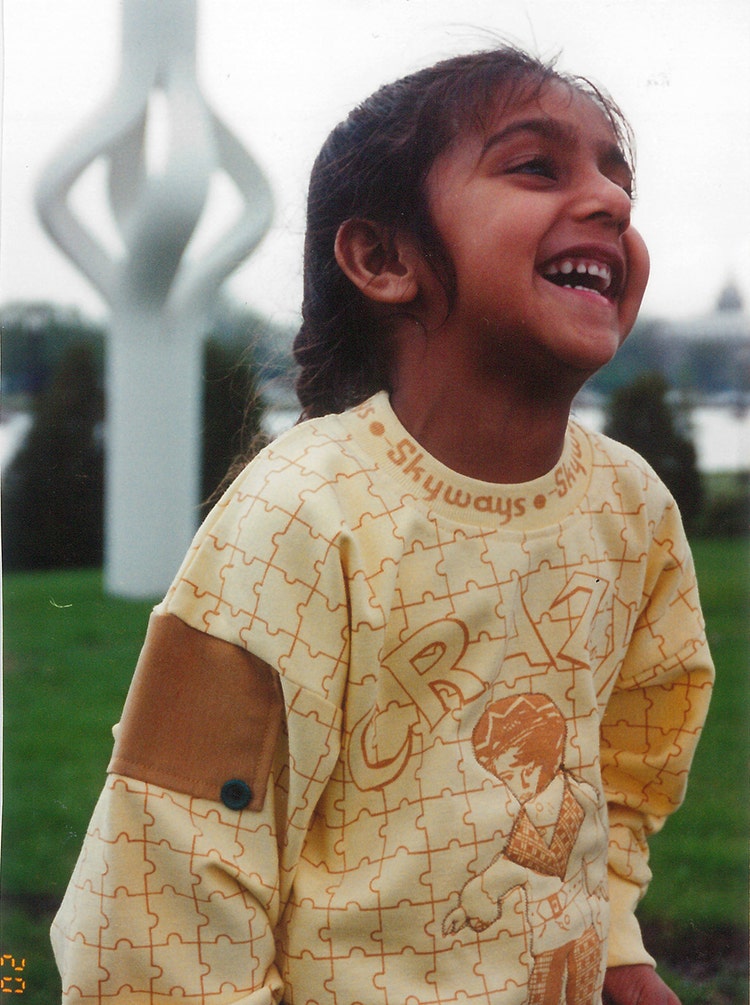
You see, Kaur’s talents were not born in the tranquil waters of the Maldives, but rather in the turbulence of growing up in Ontario, Canada by way of the Punjab in India. She describes herself as a “shy and introverted” child, struggling to adapt to the culture and language of her new home, and suggests that poetry came as a natural means of processing these difficulties. “I started writing for myself,” Kaur explains. “I feel like I came into the world feeling too much and writing helped me channel those emotions. This was never meant to be a career – it was a way I could express myself quietly.”
left
false
false
--space-m
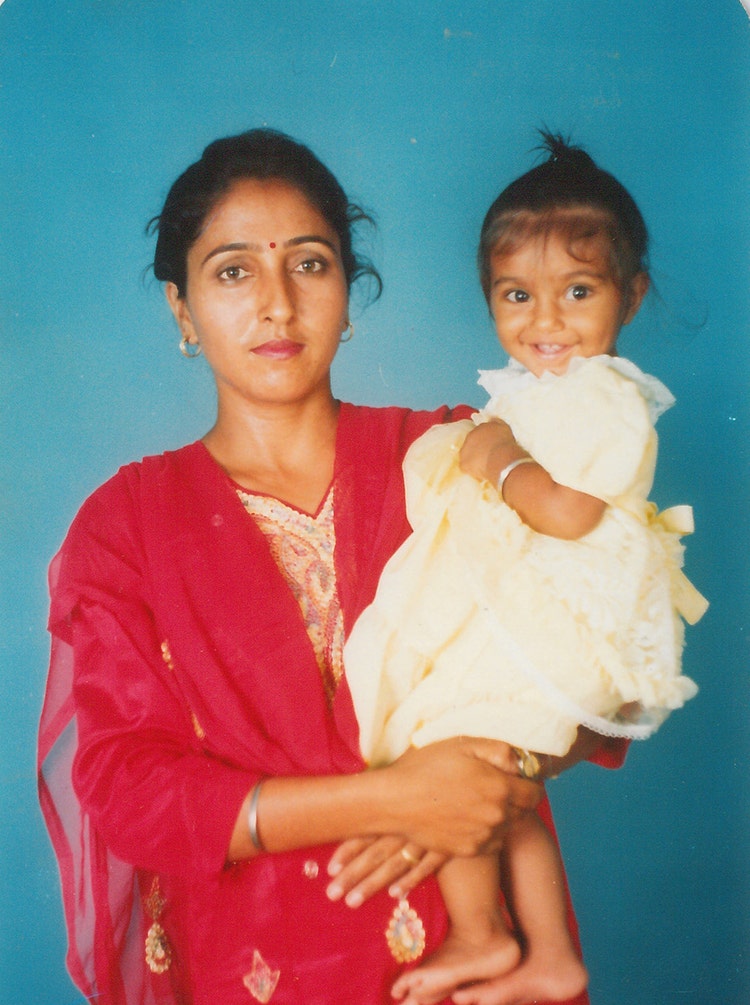
After all, having been raised in a Sikh household, Kaur was surrounded by poetry growing up: the music of Surinder Kaur and Nusrat Fateh Ali Khan that would soundtrack her home; the tukks (spiritual Sikh verses) that her father would recite by habit; and the few Punjabi poems that her father would write her mother while working abroad. It was the unique combination of these experiences that led Kaur’s debut poetry collection, Milk and Honey, self-published in 2014 while she was still at university, to be both deeply personal and globally resonant.
right
false
false
--space-m
Since then, Milk and Honey has sold 11 million copies worldwide, and Kaur has published three further books and been branded the “writer of a decade” by The New Republic. But her practice is still rooted in the context from which it first emerged. “I'm sure some things have changed, but the inspiration still comes from the same place,” she explains. “It’s personal experiences and conversations and connection with people that move me most. In a way, writing is a meditative practice.”

left
false
false
An Interview with Rupi Kaur
Below, Rupi Kaur shares more about the philosophies that underpin her practice.
What sort of values and philosophies do you tap into when you write?
Kaur: A variety. My job is to express myself as authentically as possible. It’s not to sell books or sell out tours – that’s a side effect. But if I can arrive at my desk each day and surrender to what wants to move through me – that’s it. That’s the job. As my faith teaches, the personal is always political for me. It’s my duty to engage with the world and use my voice to uplift others.
Are there any lessons you've learnt from writing and performing that you take into life more widely?
Kaur: Writing is a metaphor for life and vice versa. Whenever I arrive at my writing with an agenda, wanting a particular outcome, it never works out that way and I can be left feeling disappointed. But when I soften and surrender, magic unfolds. Life is similar. When we force, grab, and push, it’s difficult to move from A to B.
How do you hope people feel when they hear your poems?
Kaur: Seen. Inspired. Connected.
Who is the greatest poet of all time?
Kaur: Khalil Gibran.
What is your favourite poem of all time?
Kaur: “On Joy and Sorrow” from The Prophet by Khalil Gibran.
If you weren't a poet, what would you be doing?
Kaur: I'd be a painter.